Search Result

Popular Posts

Showing posts with label Subaru. Show all posts

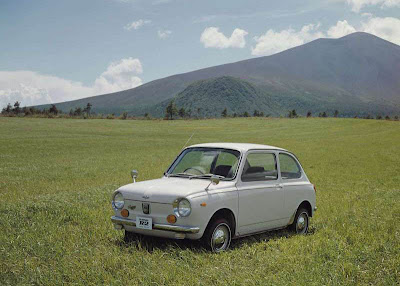
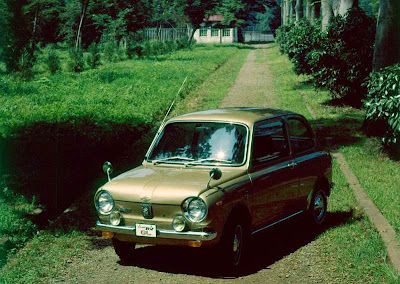
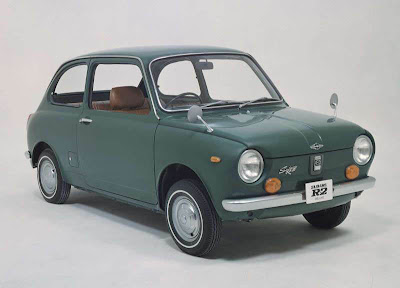
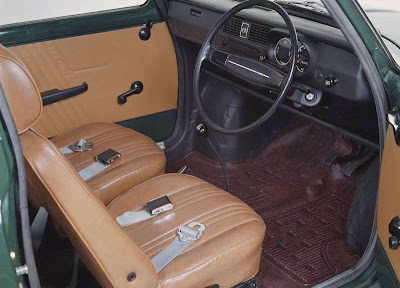
Subaru R-2, 1969

Friday, June 3, 2011

Subaru R-2, 1969

Subaru R-2, 1969

Subaru R-2, 1969

Subaru R-2, 1969

Subaru R-2, 1969

Subaru R-2, 1969

Subaru R-2, 1969

Subaru VIVIO, 1992

Monday, January 31, 2011

Subaru VIVIO, 1992


The Subaru Vivio was a keicar that was introduced in March 1992, and manufactured by Subaru.

The name "Vivio" is a reference to the numbers 660 written in Latin numerals, and also inspired by the word vivid. The Vivio replaced the Subaru Rex. It was available in 3 and 5-door versions. The "Vivio Bistro" was a variation with a retro theme, with Mini-esque front and rear fascias, matching upholstery and modifications to the dashboard. The Bistro series was popular and Japan would see a string of modern retro-styled cars.

The Vivio with a variety of supercharged 4-cylinder engines.

Subaru Alcyone SVX, 1991

Subaru Alcyone SVX, 1991


The Alcyone SVX, also known in the United States simply as the SVX was a mid-sized sports-touring coupe sold by Subaru from 1991 to 1997.

History and sales
Subaru introduced the SVX in the United States in July of 1991, following up the U.S. debut with a Japanese market introduction in September of that year. The model was designed and marketed as the replacement for their aging Alcyone XT and Alcyone XT6 coupes. US sales were good and topped 3,859 units in 1993, although it is reported that Subaru intended to sell 10,000 SVXs each year. Sales dropped significantly for the next few years before falling to just 640 units in 1997, at which point Subaru discontinued the vehicle.

Overall sales of the SVX were 14,257 in the United States and a total of approximately 25,000 worldwide. 2,478 SVXs were sold in Europe (with 854 headed directly to Germany). Roughly 7,000 of all SVXs sold were right-hand drive models.

Body
In contrast to the boxy XT, the SVX had curvy, almost futuristic lines designed by Giorgetto Giugiaro of ItalDesign and an unusual all-glass canopy with 2-piece side windows. The windows are split about 2/3 of the way from the bottom, with the division being parallel to the upper curve of the door frame. These half-windows are generally seen on vehicles with "gull-wing" or "scissor" doors such as the Lamborghini Countach and the De Lorean DMC-12.

Drivetrain
Unlike the previous model, which had been available with either a turbocharged 4-cylinder (as XT) or a naturally aspirated 6-cylinder (as XT6), the SVX debuted with and remained available with only one engine, the EG33 model 3.3 litre flat-six. The engine was an indirect development of the ER27 model, 2.7 litre unit that had powered the Alcyone XT6, although the new 3.3 litre variant was equipped with dual overhead camshafts and 4 valves per cylinder, and had an increased compression ratio of 10.0:1, bringing power up to 230 hp (172 kW) at 5,400 rpm and 228 ft·lbf (309 Nm) of torque at 4,400 rpm.

Unlike Subaru's newer models, which are all sold exclusively with all-wheel drive, the SVX was available in both all-wheel and front-wheel drive.

Though it was considered to be a very powerful vehicle at its debut, the SVX was heavy, weighing in at about 3600 pounds (1600 kg), and was only available with a 4-speed automatic transmission, both of which adversely affected performance.

Subaru Justy, 1984

Tuesday, January 11, 2011

Subaru Justy, 1984


The Subaru Justy is a Subaru compact hatchback automobile in production since 1984.

The Justy family consists of four versions.

The first one, introduced in 1984, was updated in 1989, but the changes were small. In 1994 a rebadged Suzuki Swift was sold as Justy in most European countries; in 2004 it was replaced by a rebadged Suzuki Ignis (the Subaru G3X Justy).

Initially, the Justy was equipped with a 1.0 or 1.2 litre three-cylinder engine and either a manual transmission or a continuously variable transmission with either front wheel drive or on-demand four wheel drive. The CVT technology (a pushbelt system) was employed because with a conventional automatic transmission, performance would have been unacceptable, due to the small 3-cylinder engine.

The manual transmission version of the Justy was known for excellent mechanical reliability and fuel economy. It was reported to give 50miles per gallon as a new car. However, it was small and noisy as one would expect of a compact hatchback. The five-speed manual transmission worked reliably, but was far from smooth to operate because its synchronizers were not very good.

The CVT version was able to get reasonable acceleration out of the small engine. In the United States, because of the long distances, the CVT was considered not reliable, but this has not been the case in other countries.

In the United States, the car was not sold after 1994, in Europe, Suzuki Motors built the Justy for Subaru at its Hungarian plant. However, it was merely a rebadged Suzuki Swift. In 2004, the Justy name continued in European markets on a rebadged Suzuki Ignis.

In some countries the Subaru Justy was sold under the name Subaru Trendy.

Subaru Domingo, 1983

Subaru Domingo, 1983


Subaru Domingo, 1983

Subaru Leone, 1972

Tuesday, December 14, 2010

Subaru Leone, 1972


Subaru Leone

The Subaru Leone is a compact automobile produced by Subaru from June 1971 to February 1989 when it was replaced by the Subaru Loyale, which was essentially the same car, only with a different name. The Leone was known as the "GL/DL" in North America. The Leone was offered in sedan and hardtop coupe format from launch and station wagon format starting in September 1972.

The nameplate covered three generations of compact Subaru;
  • 1972 model year - GF hardtop coupe offered alongside existing G-series sedans and wagon.
  • 1973 model year; G series replaced by new (Loyale) two- and four door sedans and 5-door wagon.
  • 1975 model year - All-wheel drive wagon offered.
  • 1978 - AWD-only pickup added, marketed as Subaru Brat in North America and Subaru Brumby in Australia. Sedans and wagons offered in plainer DL and fancier GL trim.
  • 1980 - SECOND GENERATION - restyled body for passenger cars. Two-door sedan dropped, replaced by 3-door hatchback on a shorter wheelbase than the others, available with AWD. Pickup continues on old body. 5-speed manual transmission supplied with 2WD GL sedans and wagon and GLF hardtop.
  • 1982 - Pickup now restyled, catches up with passenger cars.
  • 1983 - GL now midlevel trim, fancier GL-10 trim for all bodystyles replaces hardtop-only GLF. Turbocharged engine ("Turbo-Traction") available on AWD GL-10s. AWD now available on sedans and hardtops, and with 5-speed or automatic transmission for the first time. Minor trim changes for all models include "honeycomb" grille texture, Mercedes-style ribbed taillight lenses, and plastic-covered bumpers (except North American 2wd models). GL and GL-10 now have quad headlights.
  • 1985 - THIRD GENERATION sedan and wagon with larger, angular body. Quad headlights now on base DL, composite headlights on GL and GL-10. Hardtop discontinued, second gen. hatchback and pickup continue without change.
The Leone  became a success in areas where people wanted four wheel drive (4WD), but didn't want a larger car. It soon became the world's top-selling 4WD.

A nice feature about the car is that you can enable/disable the 4WD as you drive with a button on the gear shifter. When the car is not in 4WD mode it is in FWD (Front Wheel Drive) mode. This is much more economical since the engine doesn't have to power both the front and rear axle. So if you are getting to a steep hill you just enable 4WD and you climb up the hill with ease.

Another smart feature is the hill-holder. With this you don't have to hold the break when standing in a hill. You only hold in the clutch and press the breake once, the car will then automatically hold the break, helping you get a better start. The car is powered by a water-cooled, horizontally-opposed, 4-cylinder OHV engine.

The first Subaru Legacy was originally intended to be a Leone replacement, but the car was moved upmarket. The Leone remained in production until 1993, when the slightly smaller Subaru Impreza replaced it.

Subaru R-2, 1969

Subaru R-2, 1969


Subaru R-2, 1969

Subaru 1000, 1965

Wednesday, November 17, 2010

Subaru 1000, 1965


The Subaru 1000 was the first front wheel drive Subaru produced by Fuji Heavy Industries starting in 1966. It is sometimes claimed to be Japan's first mass produced front wheel drive car, though Suzuki had been producing front wheel drive cars in small quantities since 1955. All previous Subaru models such as the Subaru 360, Sambar, and 450 had been rear engined, rear wheel drive cars.

These cars featured a unique water-cooled, horizontally opposed four cylinder engine, with overhead valves operated by pushrods. It is thought that the engine was inspired by those used in the German Hansa-Goliath cars that had gone out of production a few years ealier, but it is not certain whether or not Subaru engineers actually used the design as a reference. Modern Subarus still make use of horizontally opposed four cylinder engines, albeit of a much greater capacity and with more modern overhead cam driven valves.

As was typical of early front wheel drive cars, the 1000 featured inboard drum brakes up front (but atypically Subaru would retain this unusual design into the seventies). Other unique features of the 1000 were a lack of a heater core, the heating system took its warmth directly from the radiator, and a hybrid suspension system that used torsion bars in combination with coil springs (much like the front suspension of the Subaru 360). The 1000 was superseded by the 1100 (also known as the Star in the United States and in other export markets) at the start of the seventies.

Subaru 360, 1958

Subaru 360, 1958
<Click thumbnails to enlarge>
 

The Subaru 360 was the first automobile mass produced by Fuji Heavy Industries' Subaru division. The 360 was produced from 1958 to 1971.

The 360 featured an air-cooled, 2-stroke 356 cc engine mounted transversely at the rear. The engine was designed with a capacity of less than 360 cc so that the Subaru 360 would qualify for Japan's keicar class. The body was of monocoque construction and featured a fiberglass roof panel, which was considered very advanced in 1958.

When introduced in 1958, the 360's engine turned out 16 hp and Subaru claimed 66 mpg fuel economy; by the end of production, power had increased to 25 hp with a 36 hp twin-carbureted engine as an option.

Several variants were produced, including a station wagon (called the Custom), a convertible, and two sport models known as the Young S, which had a slightly upgraded engine, bucket seats and a tachometer along with a black, white striped roof with a dent along the middle to put one's surfboard. The Young SS, which had dual carburetors and chrome bores, produced 36 hp (27 kW). From 1961 onwards, a truck and van called the Sambar were also produced using the 360's engine. Many small businesses became very successful thanks to the pickup's small size for tight streets, quickness, ease to drive and great fuel economy.

The 360 was imported to the United States by Malcolm Bricklin, but the Subaru 360 received notoriety in 1969, when Consumer Reports magazine branded the automobile "Not Acceptable" (because of safety concerns and lack of power), and sales collapsed. There were various rumors of Subaru 360s being tossed overboard or being shredded to pieces. It was also reported that many 360s sat on dealers' lots for two or three years without ever being purchased.

The Subaru 360 was replaced by the less popular but more advanced R-2 which was quickly superseded by the long-lived Subaru Rex model.

Subaru 1000

Monday, April 12, 2010

Subaru 1000, 1965


The Subaru 1000 was the first front wheel drive Subaru produced by Fuji Heavy Industries starting in 1966. It is sometimes claimed to be Japan's first mass produced front wheel drive car, although Suzuki had been producing front wheel drive cars in small quantities since 1955. All previous Subaru models such as the Subaru 360, Sambar, and 450 had been rear engined, rear wheel drive cars.

These cars featured a unique water-cooled, horizontally opposed four cylinder engine, with overhead valves operated by pushrods. It is thought that the engine was inspired by those used in the German Hansa-Goliath cars that had gone out of production a few years ealier, but it is not certain whether or not Subaru engineers actually used the design as a reference. Modern Subarus still make use of horizontally opposed four cylinder engines, albeit of a much greater capacity and with more modern overhead cam driven valves.

As was typical of early front wheel drive cars, the 1000 featured inboard drum brakes up front (but atypically Subaru would retain this unusual design into the seventies). Other unique features of the 1000 were a lack of a heater core, the heating system took its warmth directly from the radiator, and a hybrid suspension system that used torsion bars in combination with coil springs (much like the front suspension of the Subaru 360). The 1000 was superseded by the 1100 (also known as the Star in the United States and in other export markets) at the start of the seventies.

Subaru 360

Subaru 360, 1958


The Subaru 360 was the first automobile mass produced by Fuji Heavy Industries' Subaru division. The 360 was produced from 1958 to 1971.

The 360 featured an air-cooled, 2-stroke 356 cc engine mounted transversely at the rear. The engine was designed with a capacity of less than 360 cc so that the Subaru 360 would qualify for Japan's keicar class. The body was of monocoque construction and featured a fiberglass roof panel, which was considered very advanced in 1958.

When introduced in 1958, the 360's engine turned out 16 hp and Subaru claimed 66 mpg fuel economy; by the end of production, power had increased to 25 hp with a 36 hp twin-carbureted engine as an option.

Several variants were produced, including a station wagon (called the Custom), a convertible, and two sport models known as the Young S, which had a slightly upgraded engine, bucket seats and a tachometer along with a black, white striped roof with a dent along the middle to put one's surfboard. The Young SS, which had dual carburetors and chrome bores, produced 36 hp (27 kW). From 1961 onwards, a truck and van called the Sambar were also produced using the 360's engine. Many small businesses became very successful thanks to the pickup's small size for tight streets, quickness, ease to drive and great fuel economy.

The 360 was imported to the United States by Malcolm Bricklin, but the Subaru 360 received notoriety in 1969, when Consumer Reports magazine branded the automobile "Not Acceptable" (because of safety concerns and lack of power), and sales collapsed. There were various rumors of Subaru 360s being tossed overboard or being shredded to pieces. It was also reported that many 360s sat on dealers' lots for two or three years without ever being purchased.

The Subaru 360 was replaced by the less popular but more advanced R-2 which was quickly superseded by the long-lived Subaru Rex model.